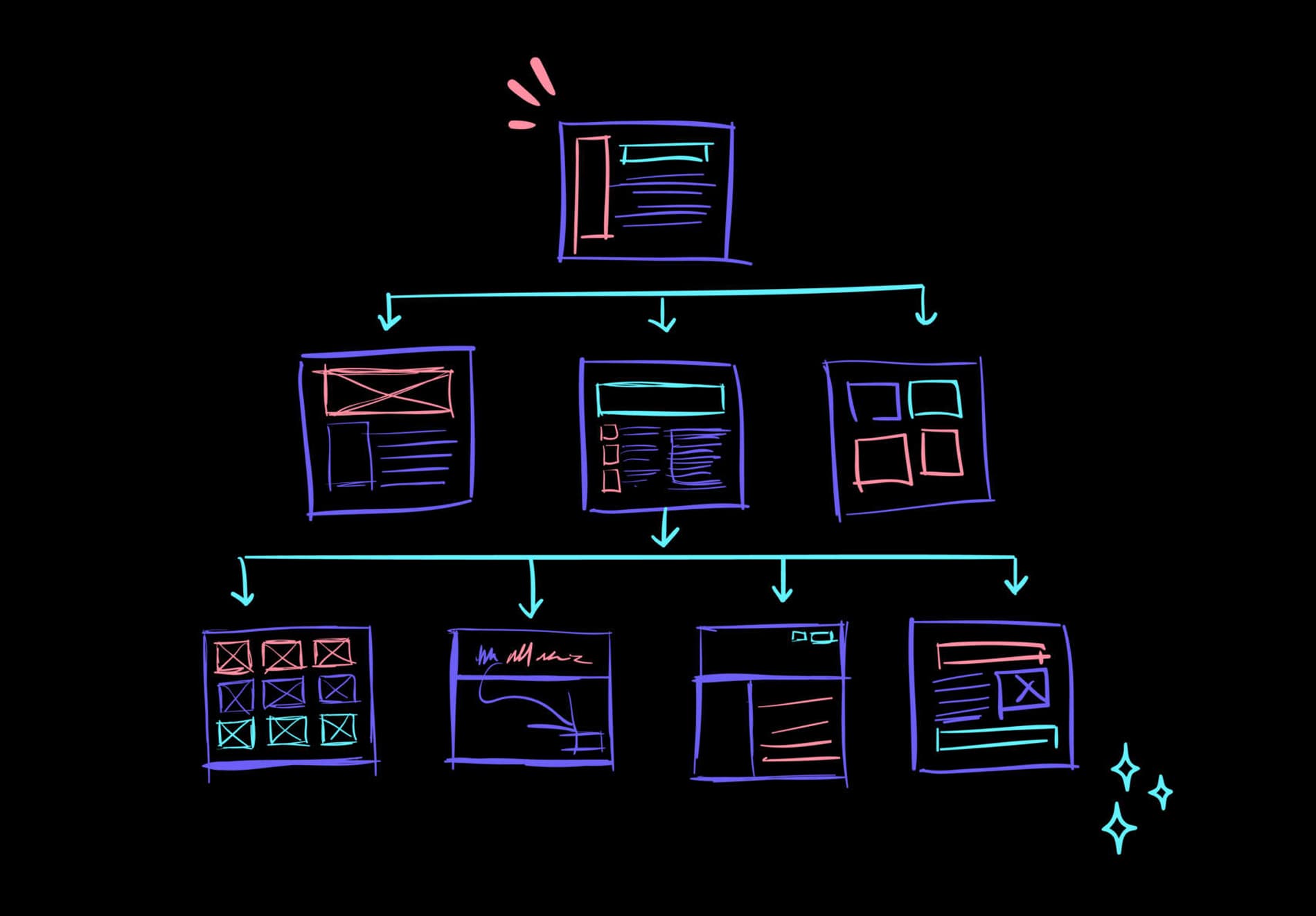
How to plan a website (top tip: start at the end)
14 November 2025
If you are thinking about a new website, you might be tempted to jump straight into colours, layouts, menus, animations and all the shiny stuff. It is exciting. We get it.
But here is a little secret from the studio: the best websites are not planned from the home page down. They are planned from the finish line backwards.
In other words: start at the end.
What do you want the website to do?
Sounds obvious, yet most businesses skip this part. Before you worry about pages and pixels, answer the real question:
What job is this website here to do?
Sell?
Educate?
Book appointments?
Build trust?
Filter your dream clients from the not so dream ones?
There is no right or wrong answer, but there does need to be an answer.
Once you know your destination, everything else starts to click.
Picture your visitor at the finish line
Imagine someone on your new site. They have explored, understood and decided to take action.
What are they doing?
- Filling in a form?
- Calling you?
- Buying something?
- Downloading something?
- Booking a consultation?
- Subscribing to updates?
Now work backwards.
What would they need to see or understand just before they take that step? And before that? And before that?
You are literally mapping the journey in reverse, which makes planning so much easier.
Why this works
Planning a website backwards helps you:
- Focus on outcomes, not decoration
- Avoid pages that sound nice but do nothing
- Create content that guides, not confuses
- Build a website that actually earns its keep
Websites are investments, not screensavers.
Create your structure
Once you know what the end looks like, the page plan builds itself.
Typical high-performing websites include:
- Home page with clear value and direction
- Services or product pages that explain the why, not just the what
- Proof and trust (case studies, testimonials, reviews)
- About page that is actually about your customer experience, not your autobiography
- Blog or resources that help people before they need you
- Contact or lead capture that keeps friction low
That is your solid foundation. You can always layer in extras later.
Think clarity, not cleverness
There is a time and place for creativity. But if your visitor is confused for even a second, they are gone.
Be clear about:
- Who you help
- What you do
- What makes you different
- What they should do next
Clarity converts. Every time.
Design last, not first
We love beautiful design, obviously. But design is strongest when built on strategy.
Define goals.
Define content and structure.
Then design around that story.
That is where the magic happens.
The quick cheat sheet
How to plan a website:
- Start at the end
- Decide the core goal
- Map the user journey backwards
- Plan only pages that serve that journey
- Keep clarity first
- Design to support behaviour, not distract from it
Ready to plan smarter?
If you want a site that does more than simply look good, we would love to chat.
Whether you are starting fresh or upgrading something that has stopped earning its keep, we build websites that move people, build trust and generate results.
Drop us a message. Let us start with the end in mind.